The Problem
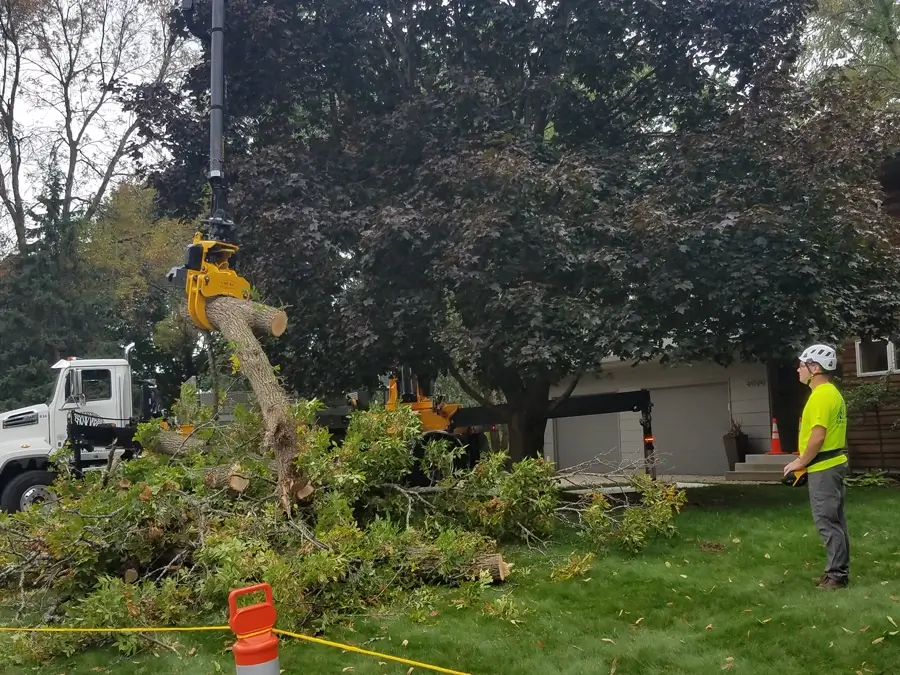
The Twin Cities face a compounding wood waste crisis with no easy exit. Emerald Ash Borer is driving removals toward 500,000+ tons annually by 2028, while the region’s primary outlet, St. Paul’s District Energy Cogeneration Plant, faces permanent closure, threatening to displace the roughly 250,000 tons of woody material it currently absorbs each year. Without an alternative, arborists are pushed toward open burning, unregulated dumping on private farmland, and landfilling, practices that degrade air quality, create fire hazards, and disproportionately harm low-income communities. Existing mulch and compost markets are at capacity, lumber infrastructure is fragmented, and no single owner has stepped forward to anchor a regional solution. Tipping fees have spiked 180% since 2022, and the financing, permitting, and governance complexity has kept private capital on the sidelines.
Our Solution
Working with Rainbow Tree Care and funded by the Minnesota Pollution Control Agency, Unified Wood Economy (UWE) completed a full regional needs assessment and developed an investment-ready roadmap for a scalable Wood Upcycling Campus (WUC) in the greater Twin Cities.
The recommended site — 795 Barge Channel Road in St. Paul — scored highest across all site selection criteria and is positioned to process 60,000 tons of wood waste annually at scale, converting material that would otherwise be burned or landfilled into dimensional lumber, biochar, and compost. The project engaged 50+ stakeholders across municipal, private, and nonprofit sectors, and produced a detailed financial pro forma projecting ~$6M in annual revenue by Year 4, 10–12 direct living-wage jobs, and over 65,000 MTCO₂e in avoided emissions. A county-owned, contractor-operated model emerged as the most viable governance structure, with a phased capital investment of ~$4.3M and a clear path to self-sustaining operations. Scaled urban wood utilization will make meaningful health and economic impacts by diverting valuable resources from landfills and burn piles into high-value products — while creating workforce pathways in communities that need them most.
This proposed project could take a significant bite out of the wood tsunami. The scale of the problem will continue to require a wide range of innovative and regenerative solutions — and this campus is designed to anchor that regional effort.